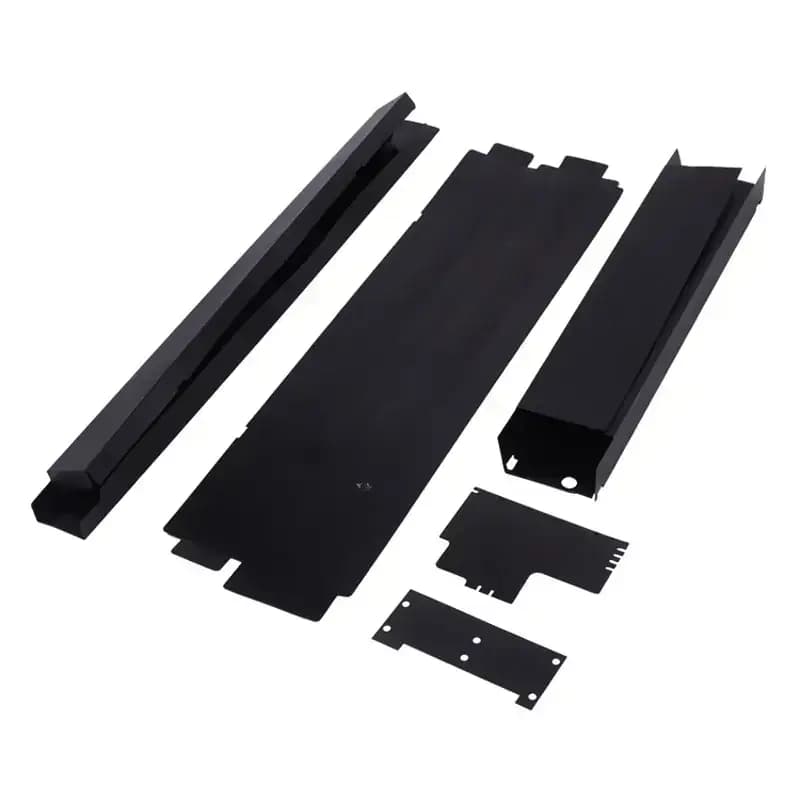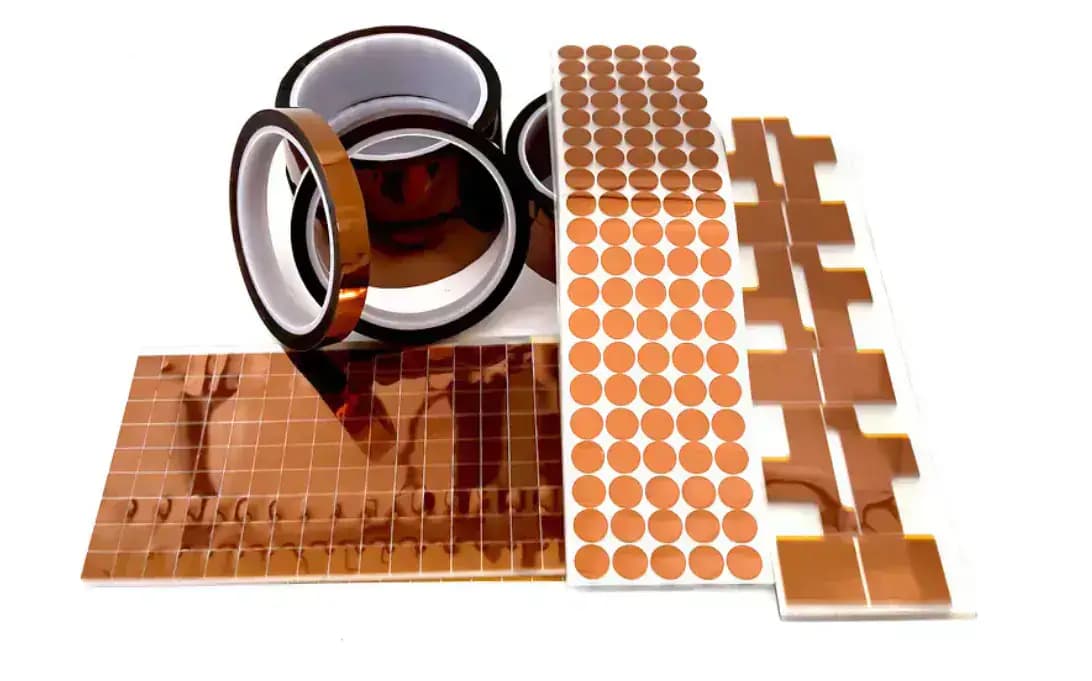
Precision Die Cut Adhesive Tape Parts
Precision die cut adhesive tape parts made to your drawing — tapes, foams, and films converted to ±0.1 mm on rotary and flatbed lines, die cut or kiss cut.
Overview
Precision die cut adhesive tape is pressure-sensitive tape converted into finished parts — pads, gaskets, frames, windows, and strips — cut to a drawing instead of supplied as standard rolls. ALS Tape converts single-coated, double-coated, transfer, foam/VHB, polyimide, and conductive constructions into die cut adhesive tape parts that arrive ready for assembly, so a line technician peels and places a part rather than cutting and trimming material by hand. The same converting workflow covers foams, films, and gasket materials when an assembly needs more than one converted component. Precision is what separates a usable adhesive tape part from a rework problem. ALS Tape holds ±0.1 mm on standard die cut parts, with tighter tolerances on qualified programs where the drawing calls for it. Rotary die cutting delivers that repeatability at production rates because the cylindrical tool engages the web continuously, without the stop-start cycle of a flatbed press. Flatbed die cutting handles profiles too large for a rotary cylinder and materials too thick or too firm to run at web speed. Multi-layer laminated parts are registered layer by layer before cutting so the stack stays aligned across the run. Choosing the right method before tooling is cut avoids both tolerance risk and unnecessary setup cost. Die cut and kiss cut are two delivery formats of the same part. A full die cut separates the part completely from the web; a kiss cut scores through the material but leaves the release liner intact, so peel-and-stick parts stay in register on a roll or sheet for line-side dispensing. Parts ship loose, on a tray, or liner-retained, and related components for one assembly — a foam gasket, a VHB bonding pad, an insulation window — can be converted and kitted together. Programs that require contamination control run under ISO Class 8 clean-room conditions. Send a DXF, DWG, PDF, or a physical sample with material and tolerance callouts, and ALS Tape confirms method, tolerance, and tooling before the first part is cut.
Process Options and Fabrication Paths
Rotary die cutting for high-volume die cut adhesive tape parts, gaskets, pads, frames, and web materials. The continuous tool engagement delivers consistent tolerances at production rates and suits most standard tape and film constructions.
Flatbed die cutting for larger formats, thicker foams, rigid substrates, and lower-volume programs where flexible tooling reduces upfront cost. Handles constructions up to several millimeters thick without web tension constraints.
Kiss cutting for peel-and-stick delivery formats. The blade scores through the material layer but leaves the release liner intact, keeping parts in position on the roll or sheet for easy dispensing during assembly.
Multi-layer lamination and converting for constructions that combine adhesive, foam, film, or foil layers into a single die cut part. Each layer is registered and bonded before cutting to ensure alignment across the stack.
Materials We Convert
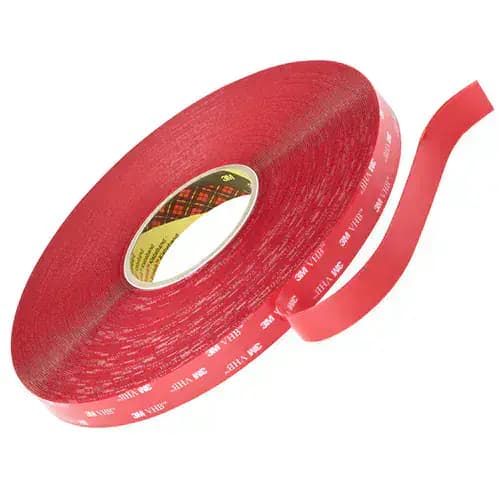
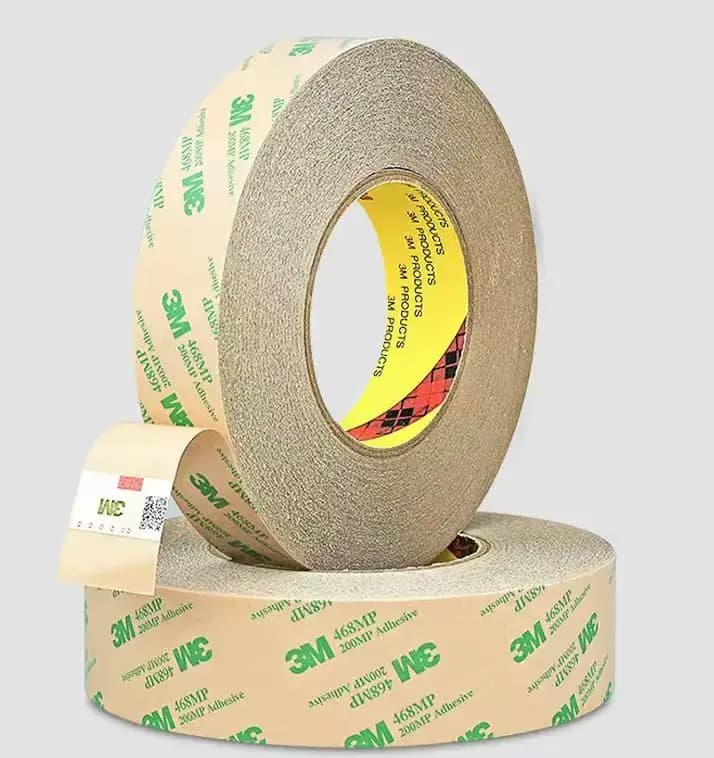
Pressure sensitive tapes and transfer adhesives — VHB, acrylic, rubber, and silicone-based constructions converted into die cut adhesive tape parts: pads, strips, and custom geometries
Foams and elastomers — PORON microcellular PU, BISCO silicone foam, neoprene, EPDM, and closed-cell foams converted to gaskets, seals, and compression pads
Films and specialty laminates — polyimide (Kapton), PET, PTFE, polycarbonate, and protective film constructions converted to precision insulation parts and windows
Thermal interface materials — graphite sheets, silicone thermal pads, and phase-change films converted to heat-path-specific geometries for electronics assemblies
EMC and shielding materials — copper foil, aluminum foil, and conductive fabric laminates converted to shielding gaskets and aperture covers
Typical Applications and Output Formats
Die cut adhesive tape pads and bonding frames for electronics enclosures and display assemblies
Die cut gaskets and compression seals for industrial housings, junction boxes, and IP-rated enclosures
Thermal interface pads cut to heat sink and component footprints for power electronics and EV battery modules
Insulation films and slot liners for motors, transformers, and high-voltage assemblies
Kiss-cut label stocks and peel-and-stick protective pads for medical device and diagnostic instrument assembly
Multi-layer laminated parts combining bonding, cushioning, and sealing functions in a single converted component
Material Groups and Delivery Support
Products Commonly Converted
Industries Commonly Needing This Capability
FAQ
What is precision die cut adhesive tape?
Precision die cut adhesive tape is pressure-sensitive tape that has been converted into a finished part cut to a specific shape and dimension, rather than supplied as a standard roll. The part arrives ready to peel and place — a gasket, mounting pad, bonding frame, insulation window, or strip — held to a repeatable tolerance so it drops into the same position on every unit. Single-coated, double-coated, transfer, foam/VHB, polyimide, and conductive constructions can all be converted this way, in full die cut or kiss cut format depending on how the assembly line dispenses the part.
What tolerance does ALS Tape hold on die cut adhesive tape parts?
Standard die cut parts are held to ±0.1 mm on critical dimensions. Tighter tolerances are achievable on qualified programs — typically ±0.05 mm for rotary die cut parts on stable film and tape substrates — and are confirmed at the quoting stage based on material, geometry, and volume. Providing a dimensioned drawing with tolerance callouts gives the most accurate answer for a specific project.
What is the difference between rotary die cutting and flatbed die cutting?
Rotary die cutting uses a cylindrical tool that engages the web continuously as it unwinds, which makes it fast and consistent for high-volume adhesive parts, thin films, and standard tape constructions. Flatbed die cutting presses a flat steel-rule tool into the material in a stop-start cycle, which accommodates larger part sizes, thicker foams, rigid substrates, and lower-volume programs where flexible tooling reduces setup investment. The right method depends on part geometry, material thickness, volume, and tolerance requirements.
What is the difference between die cut and kiss cut?
A full die cut separates the part completely from the web, cutting through both the material and the liner. A kiss cut scores through the top material layer only, leaving the liner intact so peel-and-stick parts stay in position on the roll or sheet. Die cut is standard for individual gaskets, pads, and frames that ship loose or on a tray. Kiss cut is used when parts need to stay registered for dispensing during assembly or when a peel-and-stick format simplifies line-side handling.
What file formats does ALS Tape accept for die cutting projects?
DWG and DXF are the preferred formats because they transfer geometry without scaling risk. PDF with accurate dimensions is also acceptable. Physical samples or detailed sketches with key dimensions and material callouts work for new programs without existing CAD files. For multi-layer laminated parts, a layer-by-layer breakdown of materials and thicknesses alongside the outline drawing avoids ambiguity during tooling.
What materials can be precision die cut into adhesive tape parts?
Common materials include pressure sensitive tapes and transfer adhesives, foams and elastomers such as PORON and BISCO silicone, polyimide and PET films, thermal interface materials, EMC shielding laminates, protective films, and multi-layer constructions that combine several of these. Materials that are too abrasive for steel-rule tooling or require a very small feature size may be better suited to laser cutting, which can be discussed during quoting.
What is the minimum order quantity for custom die cut parts?
There is no fixed minimum that applies to all programs. Tooling cost is a one-time investment that scales with part complexity, so lower volumes are practical when part value is high or the design is stable enough to justify the tool. Many engineering programs start with prototype quantities of 100 to 500 pieces to validate fit before moving to production runs. The quoting process covers tooling, unit price, and break quantities together so the total program cost is visible from the start.
Can ALS Tape handle die cut gaskets and seals alongside adhesive tape parts in the same program?
Yes. Gaskets and adhesive tape parts often appear together in the same housing or enclosure assembly. A typical program might combine a foam gasket for IP sealing, a VHB pad for internal component mounting, and an insulation film window — all produced from the same converting workflow and shipped as a kit. Coordinating these parts through one converter reduces sourcing complexity and keeps lead times aligned.
Does ALS Tape offer clean-room die cutting for medical or semiconductor applications?
Yes. Clean-room converting is available for programs that require contamination control, typically medical device assemblies, diagnostic instrument components, and electronics that must meet particulate cleanliness standards. Operations follow ISO Class 8 conditions with appropriate gowning, packaging, and documentation protocols. ISO 13485 quality system requirements for medical programs can be discussed during the qualification process.
How long does die cutting tooling take, and what does it cost?
Standard steel-rule tooling for a flatbed die is typically ready in 5 to 10 business days. Rotary tooling takes 10 to 15 business days depending on geometry complexity. Tooling cost varies with part size, number of cavities, and whether the tool is a simple outline or includes kiss-cut lanes, registration features, or waste matrix stripping. Prototype tooling options exist for programs that need parts before committing to production-grade tooling.
What information is needed to get a quote for die cut adhesive parts?
A complete quote request includes: a dimensioned drawing or DXF file, material specification or sample, required tolerances on critical dimensions, target quantity and delivery frequency, and any special handling or packaging requirements such as liner type, roll versus sheet format, or clean-room packaging. Partial information is still a useful starting point — ALS Tape can identify what is missing and confirm it during the quoting conversation.
Need a Converting Partner?
Precision Die Cut Adhesive Tape Parts
Share your drawing, dimensions, material preferences, or downstream assembly requirements. ALS Tape can help align fabrication methods with delivery format.