Tapes & Adhesives
Acrylic, silicone, rubber-based, and conductive PSA constructions for industrial bonding and converting
Converting Options
Material Overview
Adhesive tapes are an engineered bonding system, not a commodity. The right tape is chosen across three axes: adhesive chemistry (acrylic vs silicone vs rubber) decides temperature and environmental durability, construction (single-coated, double-coated, transfer, foam-carrier) decides assembly flow and gap-filling, and any conductivity requirement (electrical or thermal) narrows the field further. This page is a navigation entry into the tape and adhesive products ALS Tape supplies and converts — use the comparison table to identify the chemistry/construction class, then jump to the product page for full specs.
Sub-type Comparison
Acrylic PSA
Key Property: UV / weather resistant, long-term bond strength, broad surface compatibility
Typical Substrate: Acrylic adhesive on PET, foam, or transfer film
Application: Outdoor signage, electronics enclosures, structural mounting
Silicone PSA
Key Property: −60°C to +260°C service, low-VOC, bonds to silicone substrates
Typical Substrate: Silicone adhesive on polyimide or PET
Application: High-temperature masking, flex circuits, aerospace
Rubber PSA
Key Property: High initial tack, repositionable, cost-efficient
Typical Substrate: Natural or synthetic rubber on cloth, paper, or foam
Application: Carton sealing, packaging, temporary holding
Electrically Conductive
Key Property: Surface resistivity <0.1 Ω/sq, EMI shielding effectiveness >60 dB
Typical Substrate: Conductive acrylic on aluminum or copper foil
Application: EMI shielding seams, grounding straps, ESD-safe assemblies
Thermally Conductive
Key Property: Thermal conductivity 0.6–3 W/mK, electrically isolating grades available
Typical Substrate: Filled acrylic or silicone PSA
Application: LED heatsink mounting, power module attachment, EV battery thermal interface
Selection Decision Factors
Adhesive Chemistry
Acrylic for outdoor durability and long-term bonds; silicone for >150°C service or bonding to silicone substrates; rubber for low-cost packaging and repositionable use. Mismatching chemistry to environment is the single most common bond failure cause.
Surface Energy of Substrate
Low-surface-energy materials (PE, PP, powder coatings, painted metals) require specifically formulated LSE-grade acrylic or modified rubber adhesives. Standard acrylics fail on LSE plastics in 24–72 h.
Construction & Carrier
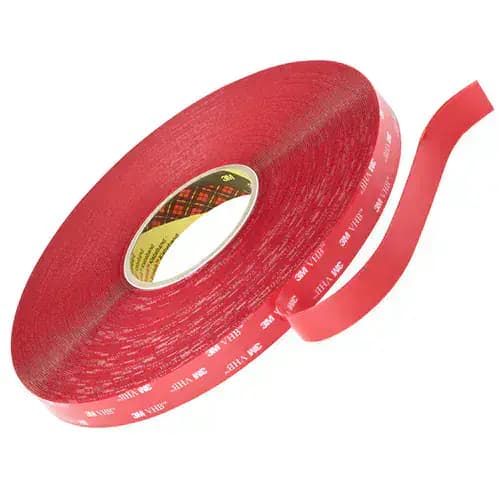
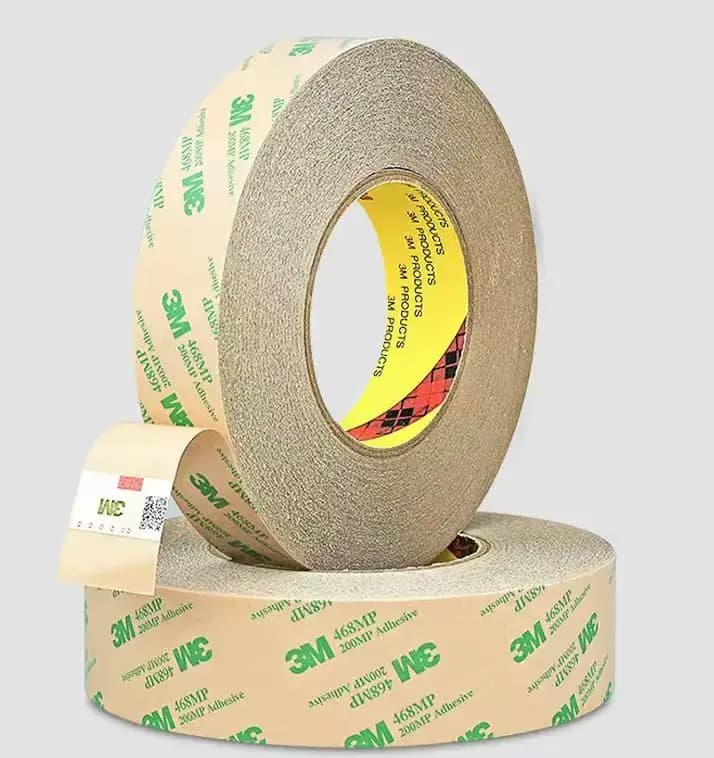
Transfer tape (no carrier) for thin adhesive layers; double-coated PET for dimensional stability; foam carrier (VHB) for irregular gap-fill and stress distribution; single-coated for masking and surface protection.
Temperature & UV Exposure
Continuous service: rubber 60°C, acrylic 120°C, silicone 260°C. Outdoor UV exposure requires acrylic or silicone — rubber yellows and loses cohesion under UV.
Functional Property Need
Choose conductive PSA when EMI shielding seams or grounding paths cross the bond line; choose thermally conductive PSA when the bond layer must also transfer heat. Otherwise standard PSA gives better cost and bond strength.
Related Products
Below are tape and adhesive products supplied and converted by ALS Tape — each links to the product page with full specs, adhesive options, thickness range, and converting capabilities.
FAQ
What is the difference between acrylic and rubber-based adhesives?
Acrylic delivers better environmental resistance, UV stability, and long-term bond strength — the default choice when the bond must hold for years. Rubber gives higher initial tack and lower cost, suited to packaging, masking, and short-duration applications. Silicone is reserved for >150°C service or for bonding silicone substrates.
When is a thermally conductive adhesive needed?
Thermally conductive PSA is required when the bonding layer also acts as the thermal path between components. Typical applications: LED-to-heatsink mounting, power module attachment to enclosures, and EV battery cell-to-cooling-plate bonding. Standard PSA blocks heat flow and creates a hot-spot.
Can adhesive tape materials be supplied in custom widths and formats?
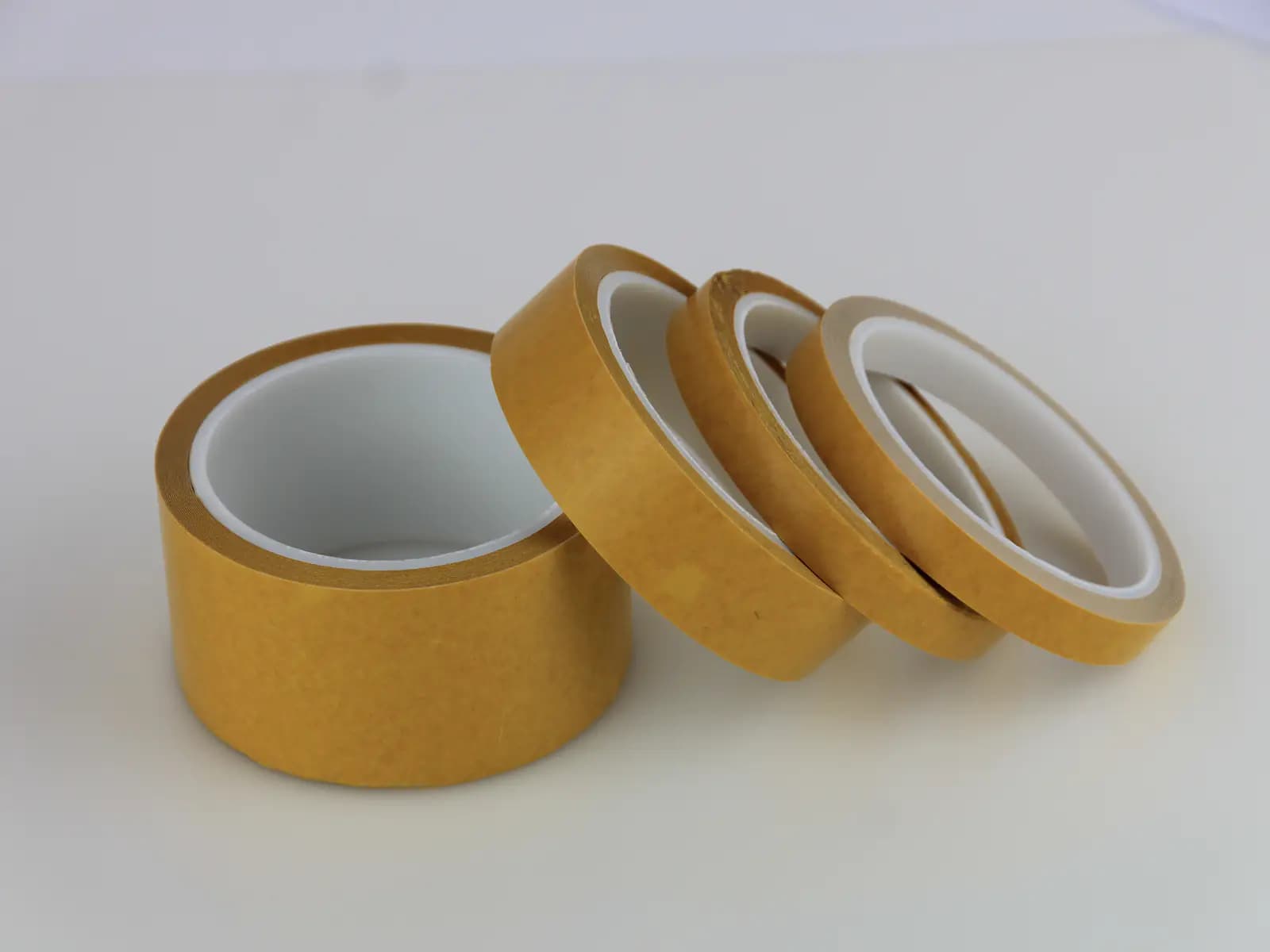
Yes. Slitting from master rolls down to ±0.1 mm tolerance, rotary and flatbed die cutting, custom roll lengths, kiss-cut pad formats, and laminated multi-layer constructions are all available — supplied either as raw material or as assembly-ready converted parts.
How do I choose between transfer tape, double-coated tape, and VHB foam tape?
Transfer tape (no carrier, just adhesive on a release liner) is the thinnest option, ideal when bond-line height matters. Double-coated PET adds dimensional stability for laminating film stacks. VHB foam tape (acrylic foam carrier) absorbs gaps, distributes stress, and replaces mechanical fasteners — the right choice for structural mounting on irregular or differential-expansion substrates.
Material Inquiry
Tapes & Adhesives
Industrial adhesive tapes and adhesive materials including acrylic, silicone, rubber-based, and electrically or thermally conductive constructions for precision converting applications.