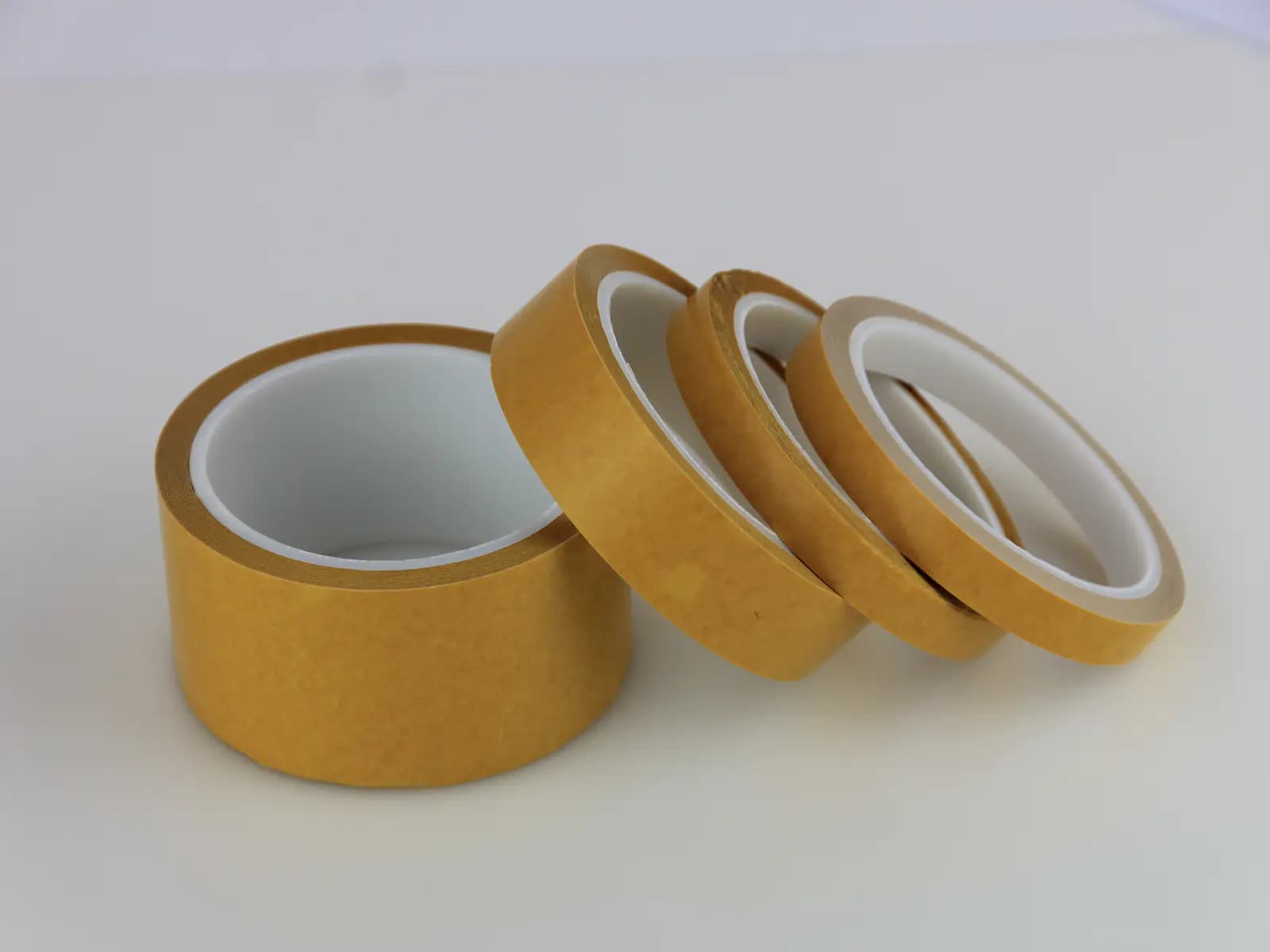
Double Coated Tissue Tape
Double coated tissue tape compared by 3M data: 9448A, 9080 and 91031 — thickness, adhesive, peel and temperature. Rolls, slit widths and die-cut parts.
Construction
Pressure-sensitive adhesive coated on a thin non-woven tissue backing
Adhesive Layout
Double coated for bonding between two surfaces
Key Properties
Lightweight, flexible, conformable, semi-transparent, writable and printable
Typical Bonded Materials
Paper, film, foam, fabric, lightweight plastic, metal, signs, and display parts
Overview
ALS Tape supplies tissue tape as a lightweight, flexible adhesive solution built on a thin non-woven tissue backing coated with pressure-sensitive adhesive. The construction is soft, conformable, and semi-transparent, making it suitable for mounting, bonding, splicing, and general assembly where the tape needs to follow curves and irregular surfaces without adding much thickness. Typical uses include attaching signs, nameplates, posters, and displays; bonding lightweight plastics, foam, fabric, and metal parts; and joining paper, film, or corrugated materials in converting workflows. ALS supports slit rolls, laminated builds, and precision die-cut tissue tape parts for prototype and production programs.
Category Focus
Double Sided Tape
Tissue, OCA, and flame retardant double sided tape constructions for lamination, bonding, and assembly.
Typical Grades and Specification Direction
Swipe sideways to see all columns →
| Model | Thickness (no liner) | Carrier | Adhesive | Key data (3M) | Typical use |
|---|---|---|---|---|---|
| 3M 9448A | 0.15 mm | Translucent cellulose tissue | Both sides coated | Peel after 72 h (N/25 mm): stainless steel 26.2, ABS 25.2, PC 26.1, PP 13.2; 90 °C long term, 150 °C short term | General bonding and lamination of metals and plastics; the tissue carrier keeps it stable for die cutting |
| 3M 9080 | 0.16 mm | Non-woven tissue | Acrylic | Adhesion to stainless steel 7.5 N/cm; 120 °C short term, 90 °C long term, −30 °C minimum | Wood, metal, glass, paper, paint and many plastics and fabrics; 3M notes high adhesion to PP and some PE |
| 3M 91031 | 0.15 mm | Tissue | Low-surface-energy acrylic | 180° peel (N/inch): stainless steel 22, PP 20, PVC 22, PC 18, HDPE 11; 120 °C short term, 80 °C long term | Foam lamination including LSE foams, trims, labels, fabric, web splicing and end tabbing |
Common 3M double coated tissue tapes, with data from 3M's data sheets (typical values, not for specification). Supplied as rolls, slit widths or die-cut parts; stock and widths are confirmed for each quote.
Key Features
Thin Non-Woven Tissue Carrier - Lightweight, flexible, and easy to conform to different shapes and surfaces.
Double Coated PSA Construction - Adhesive on both sides supports bonding between two lightweight substrates without mechanical fasteners.
Semi-Transparent Appearance - Blends into backgrounds more easily and can be written or printed on for marking and labeling uses.
Broad Light-Assembly Use - Suitable for signs, nameplates, posters, displays, foam, fabric, plastics, and other lightweight components.
Splicing Capability - Can be used to join paper, film, and corrugated materials in converting and production handling.
Converted Supply Support - Available in rolls, slit widths, laminates, and die-cut assembly-ready parts.
Applications
Mounting signs, nameplates, posters, and display graphics
Bonding lightweight plastics, foam, fabric, and metal parts in product assembly
Splicing paper, film, and corrugated materials in converting workflows
Permanent fixing of decorative trims, mirrors, and lightweight fixtures
Creative and packaging projects using cardboard, paperboard, or fabric
Die-cut adhesive parts for light industrial and assembly applications
FAQ
What is double coated tissue tape?
Double coated tissue tape has pressure-sensitive adhesive on both sides of a thin tissue carrier, usually about 0.15 mm thick in total. The tissue holds the adhesive in a stable film, so the tape is easier to handle, slit and die-cut than a carrier-free transfer tape while staying thin and flexible.
How do 3M 9448A, 9080 and 91031 differ?
All three are about 0.15–0.16 mm thick. 3M lists 9448A at about 26 N/25 mm peel to stainless steel, ABS and PC after 72 hours. 9080 uses an acrylic adhesive on a non-woven tissue and suits a broad mix of materials. 91031 uses a low-surface-energy acrylic, with 20 N/inch peel to polypropylene, and is aimed at foam lamination and LSE plastics. The three data sheets use different test setups, so compare them on your own parts.
Tissue tape or transfer tape?
Choose transfer tape when you want the thinnest, most conformable bond line with no carrier. Choose tissue tape when the part must be handled, positioned or die-cut easily, or when a slightly stiffer tape helps on the assembly line.
Which tissue tape for polypropylene or foam?
Start with a low-surface-energy adhesive such as 3M 91031, which 3M lists for foam lamination including LSE foams. 3M also notes high adhesion to polypropylene and some polyethylenes for 9080. Test on your own parts, because fillers and mould release change the surface.
Can you supply tissue tape as die-cut parts?
Yes. We slit tissue tape to width and die-cut it to your drawing, kiss cut on a liner or as loose parts. Die-cut parts start from 100 pcs; custom samples take 3–9 days and prototypes can be laser or CNC knife cut without tooling.
Related Industries
Technical Guides
Need Pricing or Material Advice?
Align Material Selection and Converting Faster
Tell us your material, dimensions, and application. We can support sourcing, converting, and custom fabrication.

