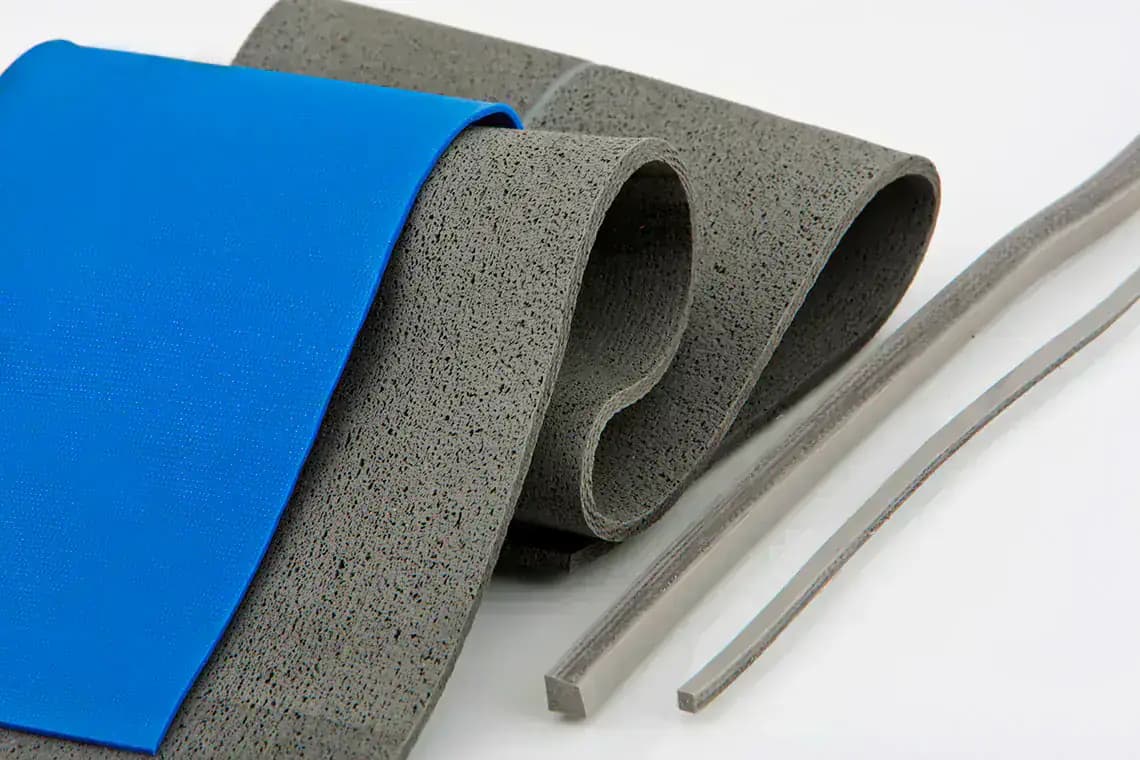
Gasket Materials
Nitrile, EPDM, silicone, Viton and PTFE gasket stock for sealing, chemical resistance and electrical insulation
Converting Options
Material Overview
Gasket selection is driven by what the seal will face — fluid type, temperature, joint pressure, and how often the assembly is opened. Elastomer gaskets (NBR, EPDM, silicone, Viton) cover most fluid and weather sealing; PTFE and graphite handle aggressive chemistry and extreme temperature; foam-based and PORON gaskets handle precision low-force sealing on electronics enclosures. This page is a navigation entry into the gasket products ALS Tape supplies and converts — use the comparison table to narrow the elastomer family, then jump to the product page for grade, hardness, and converting options.
Sub-type Comparison
Nitrile (NBR)
Key Property: Excellent oil and fuel resistance, durometer 40–90 Shore A
Typical Substrate: Acrylonitrile-butadiene rubber
Application: Engine and powertrain gaskets, fuel system seals, hydraulic equipment
EPDM
Key Property: Outdoor weatherable, ozone and UV resistant, steam-rated
Typical Substrate: Ethylene propylene diene rubber
Application: Door and window seals, HVAC, water and steam joints, outdoor enclosures
Silicone Rubber
Key Property: −60°C to +260°C service, FDA-grade and translucent options
Typical Substrate: Polysiloxane elastomer
Application: Food and pharma equipment, medical, high-temperature enclosure sealing
Viton (FKM)
Key Property: Resistant to fuels, oils, acids, and oxidizers up to +200°C
Typical Substrate: Fluoroelastomer
Application: Chemical process equipment, semicon gas lines, aerospace fluid systems
PTFE
Key Property: Chemical inertness, low friction, −200°C to +260°C
Typical Substrate: Polytetrafluoroethylene (virgin or filled)
Application: Aggressive chemistry flanges, food contact, low-friction static seals
PORON Microcellular PU Foam
Key Property: Compression set <5%, seals at low closure force, −40°C to +90°C, dust and moisture sealing
Typical Substrate: Rogers PORON microcellular polyurethane
Application: Electronics enclosure gaskets, wearable device sealing, precision low-force seals on sensitive assemblies
Selection Decision Factors
Fluid / Chemical Exposure
NBR for oils and fuels; EPDM for water, steam, and outdoor weather (not oils); silicone for food and pharma contact; Viton for aggressive chemistry and oxidizers; PTFE when nothing else holds up. Chemical compatibility tables drive elastomer choice — temperature is secondary.
Temperature Range
Continuous service: NBR 100°C, EPDM 130°C, silicone 230°C, Viton 200°C, PTFE 260°C. Each rubber loses tensile strength near its upper limit — derate by 20°C for cycling applications.
Compression Set & Sealing Force
Compression set determines how long the gasket holds its sealing force. Silicone and Viton have low compression set across temperature; standard NBR and EPDM lose recovery if compressed >25% or held >100°C continuously.
Hardness (Durometer)
Shore A 40–60 for low-bolt-load enclosure sealing; 70–80 for engine and process flanges; 90+ for high-pressure static seals. Harder rubber needs more bolt load to seal but resists extrusion.
Compliance Requirement
FDA 21 CFR 177.2600 for food contact, USP Class VI for medical, UL 157 for fluid sealing, NSF 61 for potable water. Specifying compliance up front determines which compounds within the elastomer family are eligible.
Related Products
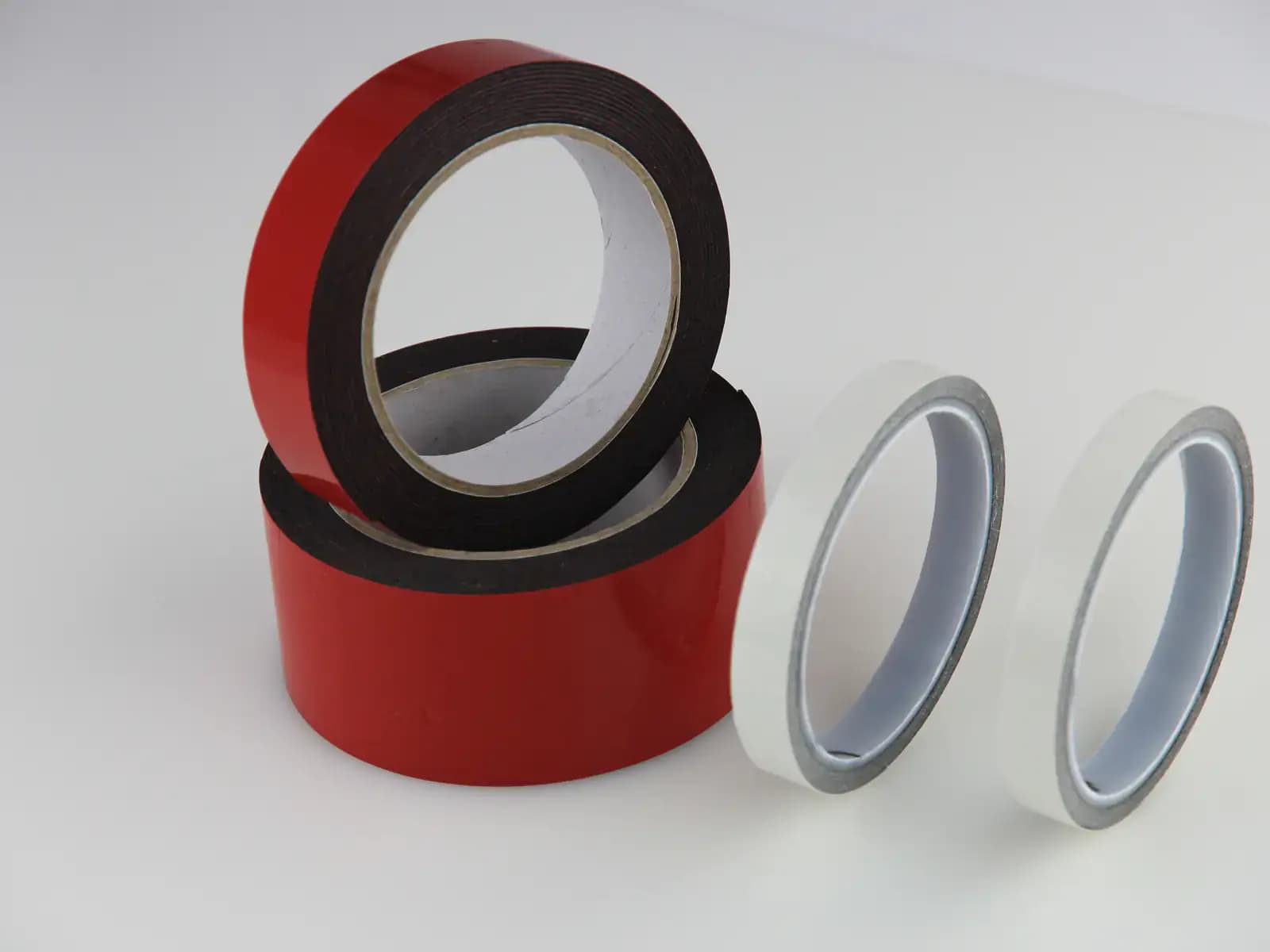
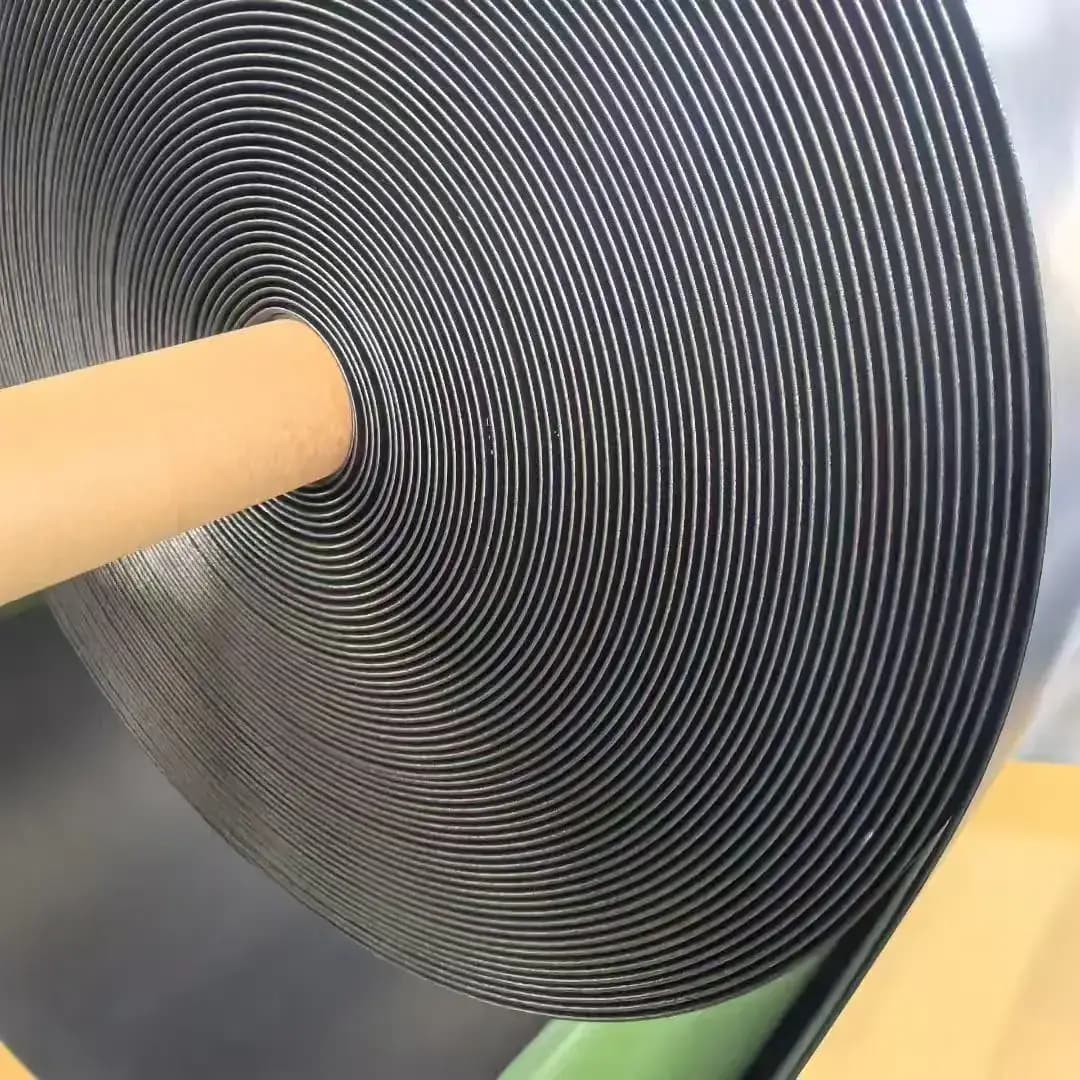
Below are gasket products and elastomer materials supplied and converted by ALS Tape — each links to the product page with full specs, hardness range, and die-cut converting options.
FAQ
Which gasket material is best for outdoor and weathering applications?
EPDM is the standard for outdoor sealing — excellent ozone, UV, and weathering resistance and good steam tolerance. Silicone is preferred when extreme temperature cycling is also required, or when food/pharma compliance matters. NBR and Viton are not suitable for prolonged outdoor UV.
When is PTFE selected over rubber-based gasket materials?
PTFE is selected when chemical inertness is critical — particularly contact with strong acids, oxidizers, or solvents that degrade rubber compounds — and for low-friction static sealing. PTFE has poor compression recovery, so it is not used where the joint is repeatedly opened and resealed.
Can gasket materials be supplied as precision die-cut parts?
Yes. Sheet and roll gasket materials can be precision die cut to custom shapes with holes, slots, and complex flange profiles to ±0.1 mm tolerance. Soft-tooling for prototypes, hard tooling for production volumes.
How do I choose between Viton and silicone for high-temperature service?
Both rate continuously above 200°C, but they target different exposures. Choose Viton when the gasket sees fuels, hydraulic fluids, or aggressive chemistry alongside heat — typical of engine bay and chemical equipment. Choose silicone when the exposure is dry heat, food/pharma, or where compression set over thermal cycling matters most.
What gasket material is best for electronics enclosure sealing?
PORON microcellular PU foam is the preferred choice for electronics enclosures — it seals reliably at low closure force, holds compression set below 5% across millions of cycles, and is available in thin sheets that die-cut cleanly to complex enclosure profiles. Silicone foam is chosen when the enclosure also faces higher temperatures or requires IP65/IP67 certification against water ingress.
What tolerances can you hold on die-cut gaskets?
Standard die-cut gasket tolerances are ±0.2 mm on outer dimensions and ±0.15 mm on hole positions for soft elastomers. Tighter tolerances of ±0.1 mm are achievable on PTFE and PORON foam with precision flatbed tooling. Provide a DWG, DXF, or dimensioned PDF and we will confirm achievable tolerance for your specific material and geometry.
Can gasket materials be supplied as cut sheets or rolls rather than finished die-cut parts?
Yes. NBR, EPDM, silicone, Viton, PTFE, and PORON foam are all available in sheet or slit-roll format for in-house fabrication, in addition to fully die-cut parts. Sheet sizes and roll widths depend on the material family — contact us with your thickness and width requirements.
Is neoprene (CR) available as a gasket material?
Yes. Neoprene (chloroprene rubber, CR) sheet is available for applications requiring moderate oil resistance combined with good weathering and ozone resistance — commonly used in HVAC, marine, and general industrial sealing where NBR's oil resistance is not required but EPDM's incompatibility with petroleum fluids is a concern. Contact us with your thickness, hardness, and application details.
Material Inquiry
Gasket Materials
Industrial gasket materials including nitrile, neoprene, EPDM, silicone, Viton, PTFE, and graphite for sealing, chemical resistance, and electrical insulation applications.