Thermal Solution
Copper-film thermal radiation tape with RH3 radiation paint coating — active heat dissipation for CPUs, batteries, solar cells, and LED modules. Three-layer construction: radiation paint + copper film + high-conductivity acrylic adhesive.
Construction
Radiation paint (RH3) + copper film + high-conductivity acrylic adhesive
Total Thickness
50μm (SA-CN2001/2/3) / 60μm (SA-CN2004/AN2005)
Copper Layer
15μm (50μm grade) / 25μm (60μm grade)
Adhesion
1500 gf/25mm — all grades
Overview
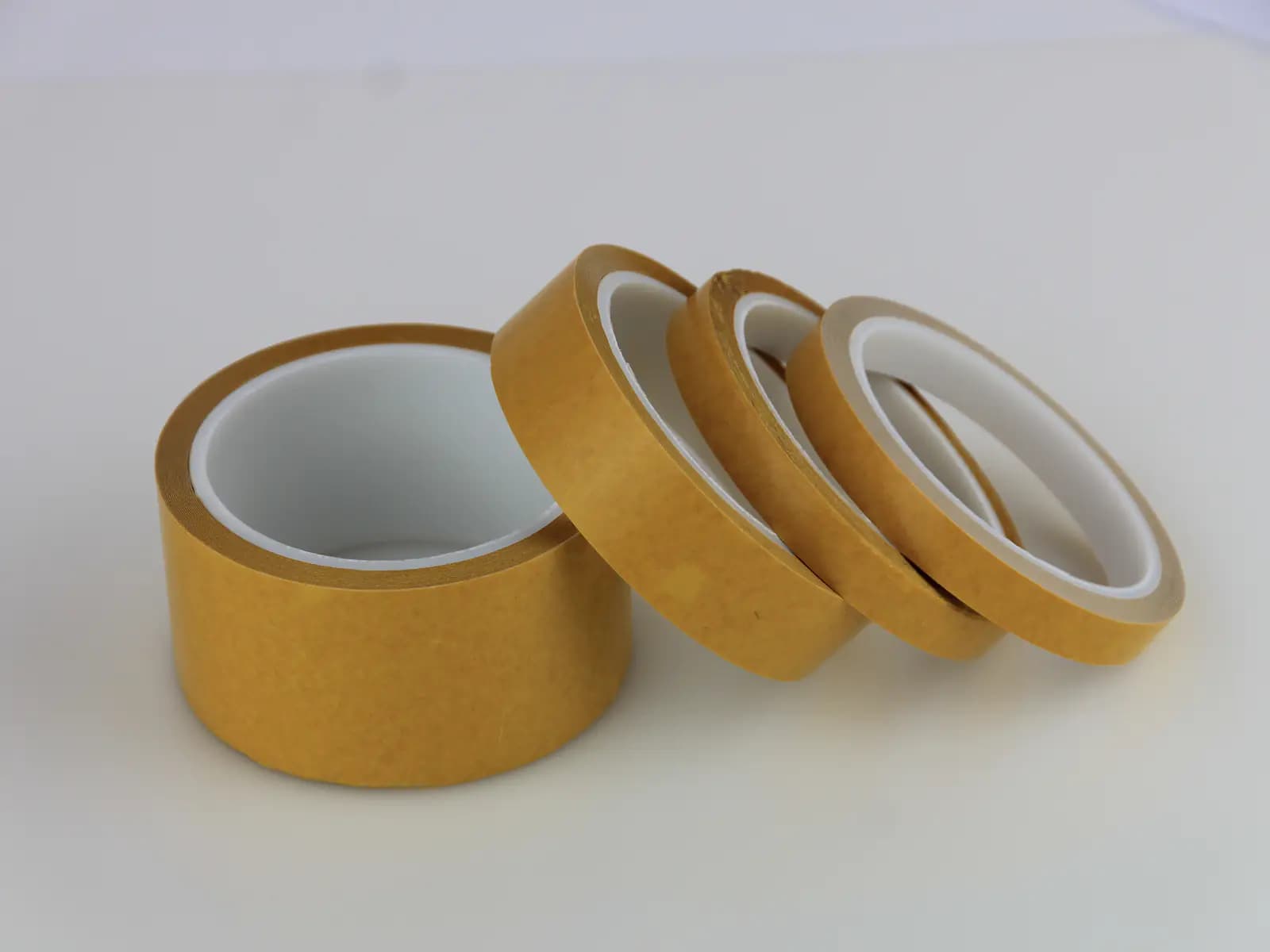
ALS Tape supplies thermal radiation tape and thermally conductive tape for electronics heat management applications. The core product is a multi-layer copper-film thermal radiation tape combining a high-conductivity acrylic adhesive base, a copper film diffusion layer, and a top-layer RH3 radiation paint coating that actively exhausts heat into the surrounding air. Unlike standard thermal tapes that only block or conduct heat, this construction provides a full heat-path solution: the acrylic adhesive layer bonds to the heat source and conducts heat in; the copper layer spreads heat laterally across a wider surface; and the radiation paint coating actively releases heat outward. Available in ivory (SA-CN200X, 50μm) and gray (SA-CN2004, 60μm) variants with emissivity values of 0.84–0.86 and thermal conductivity of 120–130 W/m·K. Adhesion is 1500 gf/25mm across all grades. ALS can supply in roll format, slit widths, or die-cut pads to drawing dimensions.
Category Focus
EMI Shielding & Thermal Material
EMI shielding tape and thermal interface materials for electronics, EV battery, and LED assemblies.
Typical Grades and Specification Direction
| Series / Model | Thickness | Adhesive Type | Liner | Profile | Typical Use |
|---|---|---|---|---|---|
| SA-CN2001 | 50μm (15μm copper) | High-conductivity acrylic | Release liner | Ivory / Emissivity 0.85 | CPU, semiconductor, LED thermal path |
| SA-CN2002 | 50μm (15μm copper) | High-conductivity acrylic | Release liner | Ivory / Emissivity 0.86 | Mobile battery, compact electronics |
| SA-CN2003 | 50μm (15μm copper) | High-conductivity acrylic | Release liner | Ivory / Emissivity 0.86 / TC 130 | High-output LED, solar thermal management |
| SA-CN2004 | 60μm (25μm copper) | High-conductivity acrylic | Release liner | Gray / Emissivity 0.84 | Power electronics, EV battery modules |
| SA-AN2005 | 60μm (25μm copper) | High-conductivity acrylic | Release liner | Ivory-Gray / Emissivity 0.85 | Multi-zone thermal management builds |
Key Features
Active Heat Radiation — RH3 radiation paint top layer actively exhausts heat into the surrounding atmosphere rather than simply blocking or redirecting it. Emissivity 0.84–0.86.
Copper Film Heat Spreading — Copper material layer spreads heat faster than standard thermal adhesives, distributing localized hot-spot heat across a wider surface before radiation.
High-Conductivity Acrylic Adhesive — Adhesive base layer achieves significantly higher thermal conductivity than industry-standard thermal tapes, reducing thermal resistance at the bonding interface.
Ceramic-Level Coating Durability — RH3 radiation paint provides heat-resistant durability comparable to ceramic materials while remaining thin and flexible for compact device integration.
Thin Form Factor — 50–60μm total thickness allows integration into tight device packaging where standard thermal pads or thick gap fillers cannot fit.
Die-Cut and Roll Supply — Available in slit rolls and die-cut parts to drawing dimensions for repeatable production assembly.
Applications
CPU and semiconductor component heat transfer paths
Mobile device battery and lithium-ion battery thermal management
Solar cell heat dissipation and thermal stabilization
LED lighting fixture and module heat management
Power electronics and control unit thermal interface
Compact electronics with tight internal packaging constraints
FAQ
How does thermal radiation tape differ from standard thermal interface pads?
Standard thermal interface pads (TIPs) conduct heat from a component into a heatsink or chassis — they reduce contact resistance between two surfaces that are already pressed together. Thermal radiation tape works differently: the copper film layer spreads heat laterally across a wider area, and the RH3 radiation paint coating actively releases heat into the surrounding air by radiation. This makes it the correct choice when there is no heatsink to conduct heat into — for example, flat battery surfaces, PCB component areas with no adjacent thermal mass, or LED strips mounted on non-metallic substrates. The two products address different thermal management problems and are not interchangeable.
What is emissivity and why does it matter for heat dissipation?
Emissivity is a measure of how efficiently a surface radiates heat as infrared energy relative to a perfect radiator (emissivity = 1.0). The SA-CN series achieves emissivity values of 0.84–0.86 via the RH3 radiation paint coating. By comparison, bare copper or aluminum surfaces have emissivity values around 0.03–0.10 — they are poor radiators. The high-emissivity coating on these tapes increases the rate of heat radiation by approximately 8–25× compared to the underlying copper surface alone, which is why the copper film layer achieves active cooling rather than just heat spreading.
What is the thermal conductivity of the SA-CN series thermal tape?
The SA-CN series achieves thermal conductivity values of 120–130 W/m·K, with SA-CN2003 and SA-CN2004 at the higher end of this range. This is well above standard pressure-sensitive thermal tapes (typically 1–3 W/m·K), driven by the copper film layer which is the primary conduction path. The high conductivity adhesive layer reduces interfacial thermal resistance at the bond surface. Confirm the specific grade for your application as thermal conductivity values vary across the five SA-CN models.
Can thermal radiation tape be die-cut into custom pad shapes?
Yes. The SA-CN series is available in slit rolls and can be precision die-cut into pads, strips, and custom shapes to drawing dimensions. Total tape thickness is only 50–60 μm, which requires precision tooling to cut cleanly without adhesive smear or edge tearing. ALS Tape handles die-cutting in-house. Provide your pad dimensions, required grade, and target volume to request a quote.
Is thermal radiation tape suitable for EV battery module thermal management?
The SA-CN2004 grade (60 μm, gray, 0.84 emissivity, 120 W/m·K) is specified for power electronics and EV battery module applications. Its thicker copper layer (25 μm vs 15 μm in other grades) provides greater lateral heat spreading across battery cell surfaces, and the high adhesion (1500 gf/25mm) ensures durable bond to cell exterior surfaces across thermal cycling. It is not a substitute for a direct liquid cooling plate or phase change thermal pad where direct conduction to a controlled temperature surface is required — it is used where passive radiation from cell surfaces supplements or replaces other thermal management.
What is the total thickness and adhesion strength of these thermal tapes?
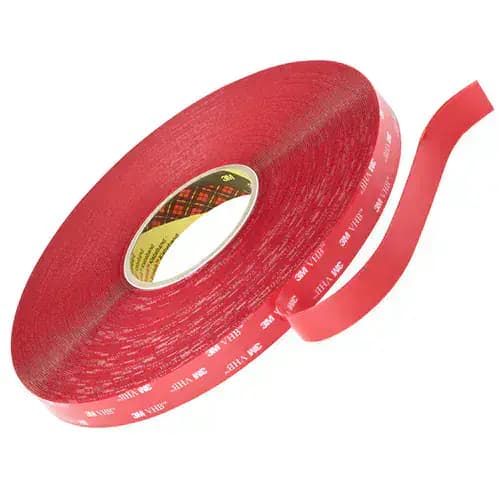
Total tape thickness is 50 μm for SA-CN2001/2002/2003 grades and 60 μm for SA-CN2004/AN2005 grades. This thin profile allows integration into compact device assemblies where standard thermal gap pads (typically 0.5–3 mm thick) do not fit. Adhesion is 1500 gf/25mm across all grades — the same adhesion level as 3M VHB tape — providing secure, durable bonding to metal and smooth plastic surfaces without additional fasteners.
Related Capabilities
Related Industries
Technical Guides
Need Pricing or Material Advice?
Align Material Selection and Converting Faster
Tell us your material, dimensions, and application. We can support sourcing, converting, and custom fabrication.