PI Film
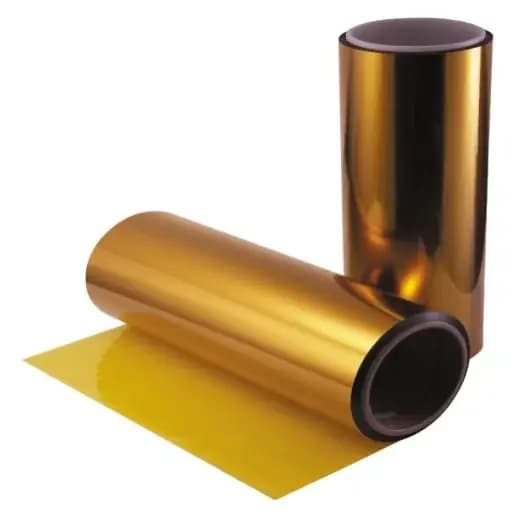
Polyimide (Kapton-type) film for high-temperature insulation, flexible circuits, EV battery wrapping, and precision electronics converting — supplied in rolls, slit widths, and die-cut parts.
Material
Polyimide (PI) film — Kapton-type
Temperature range
Up to 400°C continuous — Class H / Class C electrical insulation
Typical thickness
7.5μm to 125μm depending on grade and application
Color
Amber / golden-brown (standard PI); black variants available for specialized builds
Overview
ALS Tape supplies polyimide (PI) film — the Kapton-type amber-gold engineering film used wherever continuous high-temperature performance, electrical insulation, and dimensional stability are required. PI film is specified for flexible printed circuit substrates and cover layers, motor slot liner insulation, EV battery cell wrapping and module barriers, high-temperature PCB masking, and thin dielectric layers in demanding electronics and industrial assemblies. The film maintains its mechanical and electrical properties from cryogenic conditions up to 400°C continuous service, making it the standard choice when PET or other polyester films cannot meet the thermal budget. ALS converts PI film into production-ready formats including custom slit widths, sheeted panels, laminated constructions with adhesive or release liners, and precision die-cut insulation parts such as slot liners, wrapping strips, and punched insulation patches.
Category Focus
Functional Film
PI, electronic, aerospace, and biomedical functional films for insulation, protection, and specialty applications.
View source documentKey Features
Kapton-type amber polyimide film — continuous service to 400°C, stable from cryogenic to high-temperature environments
Class H and Class C electrical insulation rating — suitable for motor winding, EV battery, and electronics insulation builds
Dimensional stability through thermal cycling — retains tensile strength, elongation, and dielectric properties under repeated thermal stress
Chemical resistance — resistant to most solvents, fuels, and processing chemicals used in electronics and industrial manufacturing
Supplied as roll film, slit widths, laminated structures, sheets, and precision die-cut converted parts
Converting support — slitting, die-cutting, lamination, and rewinding to production-ready format for downstream assembly
Applications
Flexible printed circuit (FPC) substrate and cover layer
EV battery cell wrapping and module insulation barrier
Motor slot liner and coil winding insulation
High-temperature PCB and electronics assembly masking
Precision die-cut insulation patches and strips for electronics assembly
Transformer and capacitor winding dielectric layer
Related Solution Paths
FAQ
What is the maximum continuous service temperature for PI film?
Polyimide (PI) film maintains its mechanical and electrical properties at continuous service temperatures up to 400°C. This is significantly higher than polyester (PET) film, which is limited to approximately 150°C continuous. PI film is also stable from cryogenic temperatures, making it one of the few insulation films that covers both the cold end (EV battery pack low-temperature exposure) and the hot end (motor insulation, wave soldering masking) without material substitution.
What is the difference between PI film and Kapton tape?
PI film is the base polyimide substrate supplied as uncoated roll film, slit widths, or sheeted panels — no adhesive. Kapton tape is PI film with a pressure-sensitive adhesive applied to one side, typically silicone adhesive for high-temperature applications or acrylic adhesive for standard temperature range use. PI film is used when the application requires a bare dielectric layer (motor slot liners, FPC substrates, laminated constructions) without adhesive-related concerns such as adhesive creep, outgassing, or high-temperature adhesive degradation. See the Kapton Tape guide linked above for full selection guidance between coated and uncoated PI.
Can PI film be used for EV battery cell wrapping and module insulation?
Yes. PI film is widely used in EV battery assemblies for cell wrapping (outer insulation layer on prismatic or cylindrical cells), inter-cell barrier films, and module-level electrical isolation between cells and the structural housing. The film's combination of thin profile, high dielectric strength, thermal stability across the EV battery operating range, and chemical resistance to electrolyte contact makes it the preferred specification for high-voltage isolation in battery packs. ALS converts PI film into slit widths and cut lengths matched to standard cell formats.
What thickness range is available for PI film?
Standard PI film thicknesses range from 7.5 μm to 125 μm. Thin grades (7.5–25 μm) are used for flexible circuit substrates, laminated dielectric layers, and weight-sensitive EV battery wrapping. Mid-range grades (25–50 μm) cover most motor insulation, PCB masking, and general converting applications. Thicker grades (75–125 μm) are used for slot liners, structural insulation barriers, and applications requiring higher dielectric withstand voltage. Specify your application and required dielectric voltage rating and we will recommend the appropriate grade.
What converting operations does ALS Tape support for PI film?
ALS Tape supports slitting (custom widths from full-width roll stock), sheeting (cut-to-length panels), lamination (adhesive or release liner application to one or both sides), and precision die-cutting (custom insulation patches, slot liners, wrapping strips, punched shapes). Die-cutting PI film requires tooling appropriate for the film thickness — thin grades require precision flatbed tooling to prevent film tearing at cut edges. Contact us with your geometry, thickness, and required quantity for a converting feasibility review.
What electrical insulation class does PI film achieve?
Polyimide film meets Class H electrical insulation (180°C continuous) under IEC 60085 — the rating used for motor slot liners and transformer winding insulation where winding temperatures reach 155–180°C under load. PI film's actual continuous service capability of 400°C far exceeds the Class H threshold, making it suitable for demanding builds that exceed Class H requirements. EV battery and electronics applications typically cite dielectric strength (V/μm) rather than a thermal class rating — confirm the required specification for your application.
Technical Guides
Need Pricing or Material Advice?
Align Material Selection and Converting Faster
Tell us your material, dimensions, and application. We can support sourcing, converting, and custom fabrication.